|
'Kilburn Nightingale's work at Emmanuel College responds to the essence of an ancient building type and the demands of modern scholarship, finds Dean Hawkes.
'"A man with a book goes to the light. A library begins that way." Louis Kahn captured the essence of the library when contemplating his design for the library at Philips Exeter Academy (1965-1972). The architecture of the academic library revolves around the interdependent functions of the storage and use of books, and the history of type, from its origins, with the foundation of medieval universities, reveals a process of constant change as these functions have been redefined. Buildings representing all significant points in this history are to be found in Cambridge. Trinity Hall (1570) has one of the most perfect examples of the medieval library with readers and books intimately close, and next door at Trinity College the Wren Library (1690) is a vast, book-lined room flooded with light from great windows above.
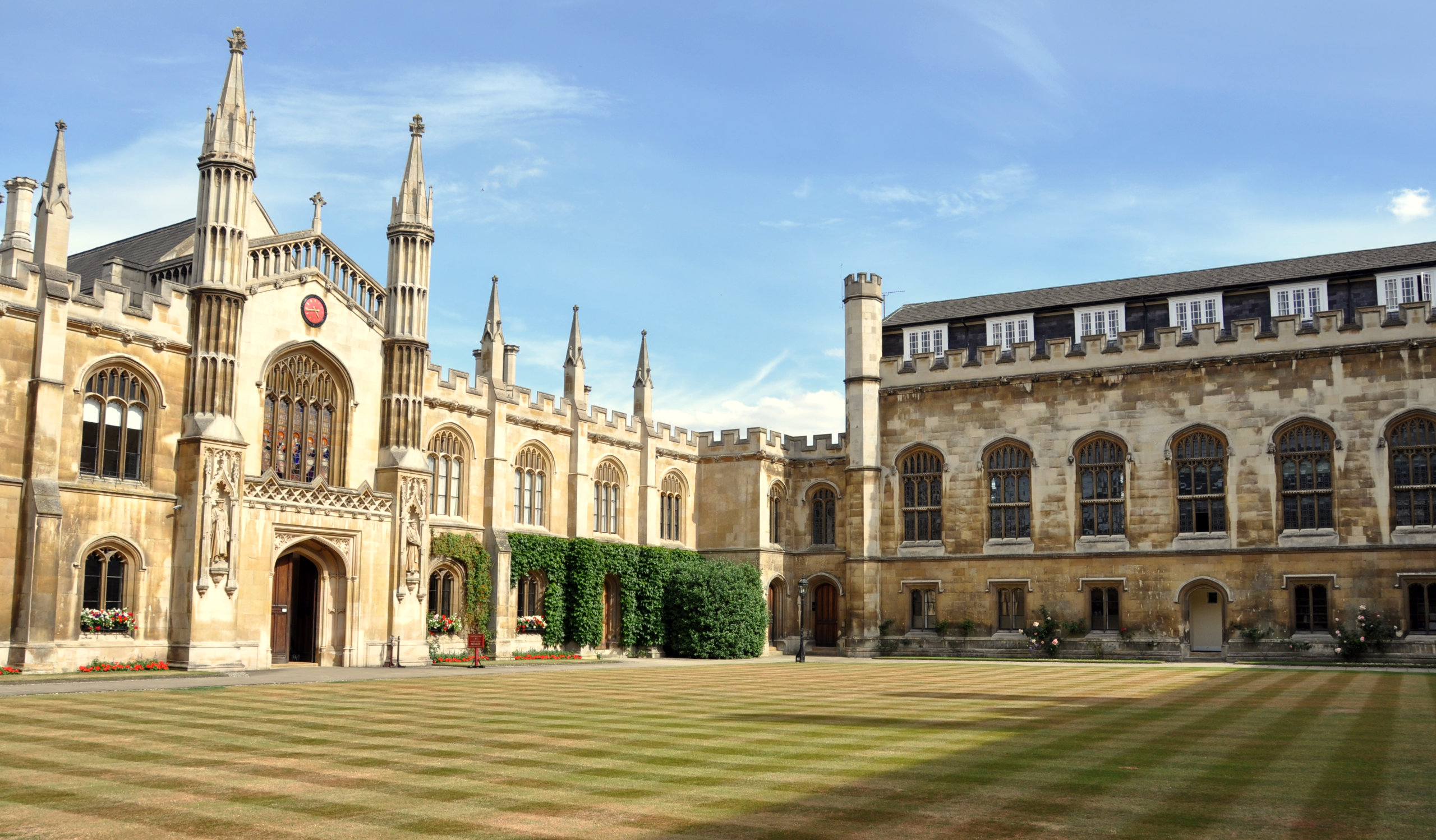
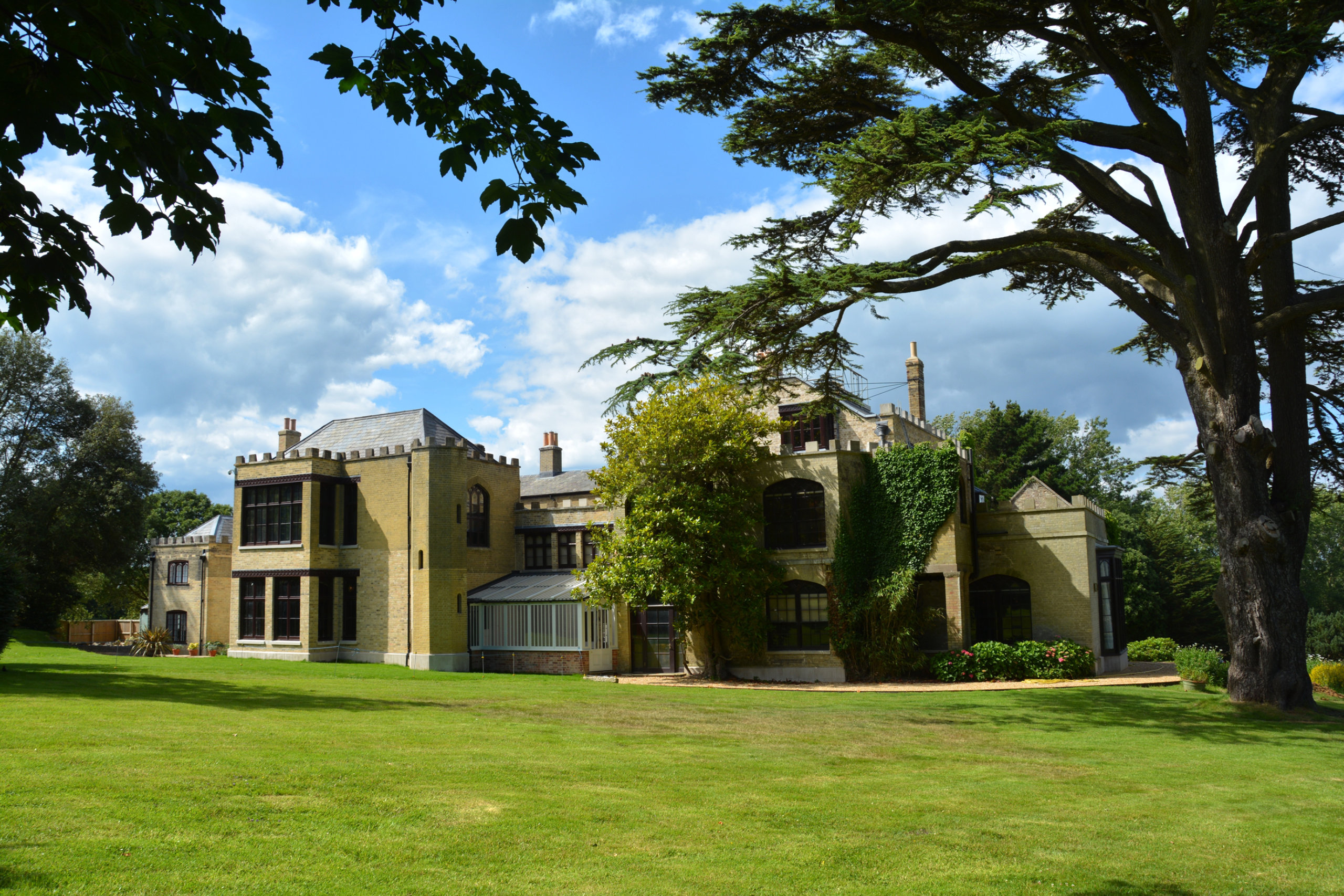
'Emmanuel College was founded in 1584 on the site of an earlier Blackfriars house. It then consisted of a master, three fellows and four scholars. It now has a master, 80 fellows, 450 undergraduates and 150 graduate students and inhabits buildings dating from four and more centuries. Its architectural highlights include the chapel by Wren (1674) and the Queen's Building by Michael Hopkins (1995). In support of this community of scholars the college library has become a large and complex institution. The brief for its extension, won in competition in 2007 by Kilburn Nightingale, required that the architect worked with the existing library building. This has a complex history. In 1909 Leonard Stokes built a handsome two-storey lecture room building, in what Pevsner describes as Arts-and-Crafts-Gothic, overlooking the Paddock garden at the southern end of the college grounds. In 1932 George Drysdale, Stokes' successor, sympathetically extended and transformed this building to become the library with a splendid reading room on the upper floor. Inevitably the library expanded further and in the 1970s the Manchester practice of Cruickshank & Seward added a four-storey, utilitarian brick and concrete extension, discreetly tucked away at the south-west corner.
'A college library houses up-to-date textbooks for use by its students in relation to the courses offered by the university. It also holds more general material and reference and rare book collections, often of considerable bibliographical value. Emmanuel has particularly significant holdings of these. It is quite usual that students and fellows will work in the library in diverse ways and for long hours. In recent years digital technology has become an important, even essential, component of scholarly method, with the laptop as ubiquitous as the pencil and notebook. Louis Kahn's act of 'going to the light' thereby becomes a complex and subtle business, whose architectural interpretation requires equal complexity and subtlety.
'The two existing buildings of tile library were, in their architectural language and topography, quite distinct, the older building being a grand statement and the 1970s addition expressing the architectural reductivism of the time. A possibility in the brief was to demolish the Cruickshank & Seward building, which was little more than a bookstore, and to add a completely new extension to the listed Stokes/ Drysdale building. Kilburn Nightingale has, however, retained this block and attempted the difficult but admirable task of creating a new unity between it and the older block. The key move was to strip away the fortress-like brick envelope and add a new, more delicate and articulated timber skin beyond the original perimeter. This extends around Cruickshank & Seward's staircase tower and unfolds along the southeast facade of the Stokes building to create both valuable new space within and a small garden against the medieval wall that defines the site boundary. The link to the Cruickshank building is also at this level, tying together the whole organisation. Back at ground level the entrance hall is extended, in a tall clerestoried atrium, along the southern face of the Stokes building. This elegantly expands to the south to form a comfortable reading / seminar space looking into the small garden alongside the medieval wall. It also serves as a foyer to the sequence of three special rooms housing specific rare book collections at the ground floor of the Stokes building and acts as an unassuming buffer to the controlled environments of the rare book rooms. Indeed throughout the building one can see discreet and effective environmental strategies finding their natural place in the architectural language - much preferable to the crudeness of environmental 'bling'.
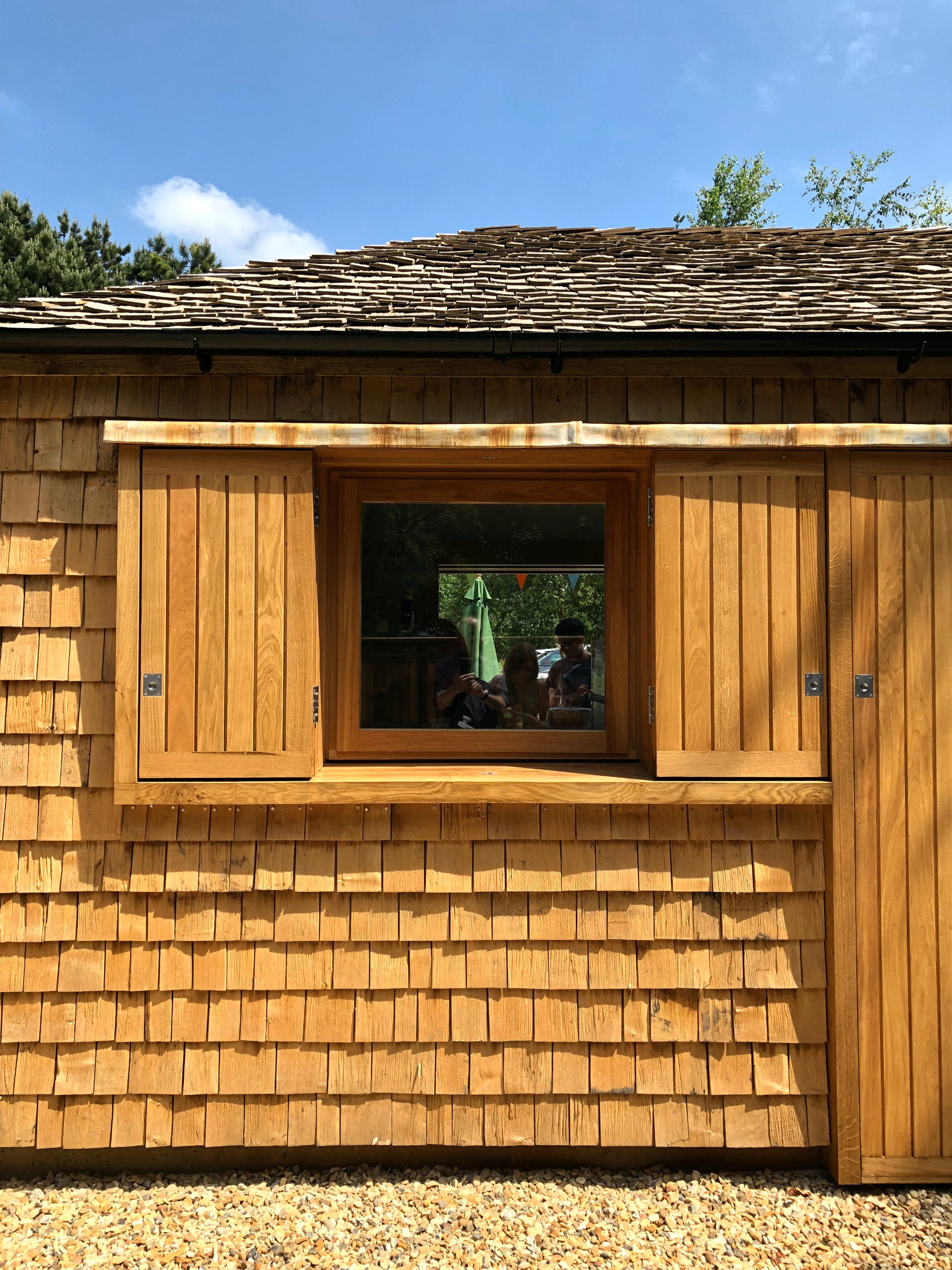
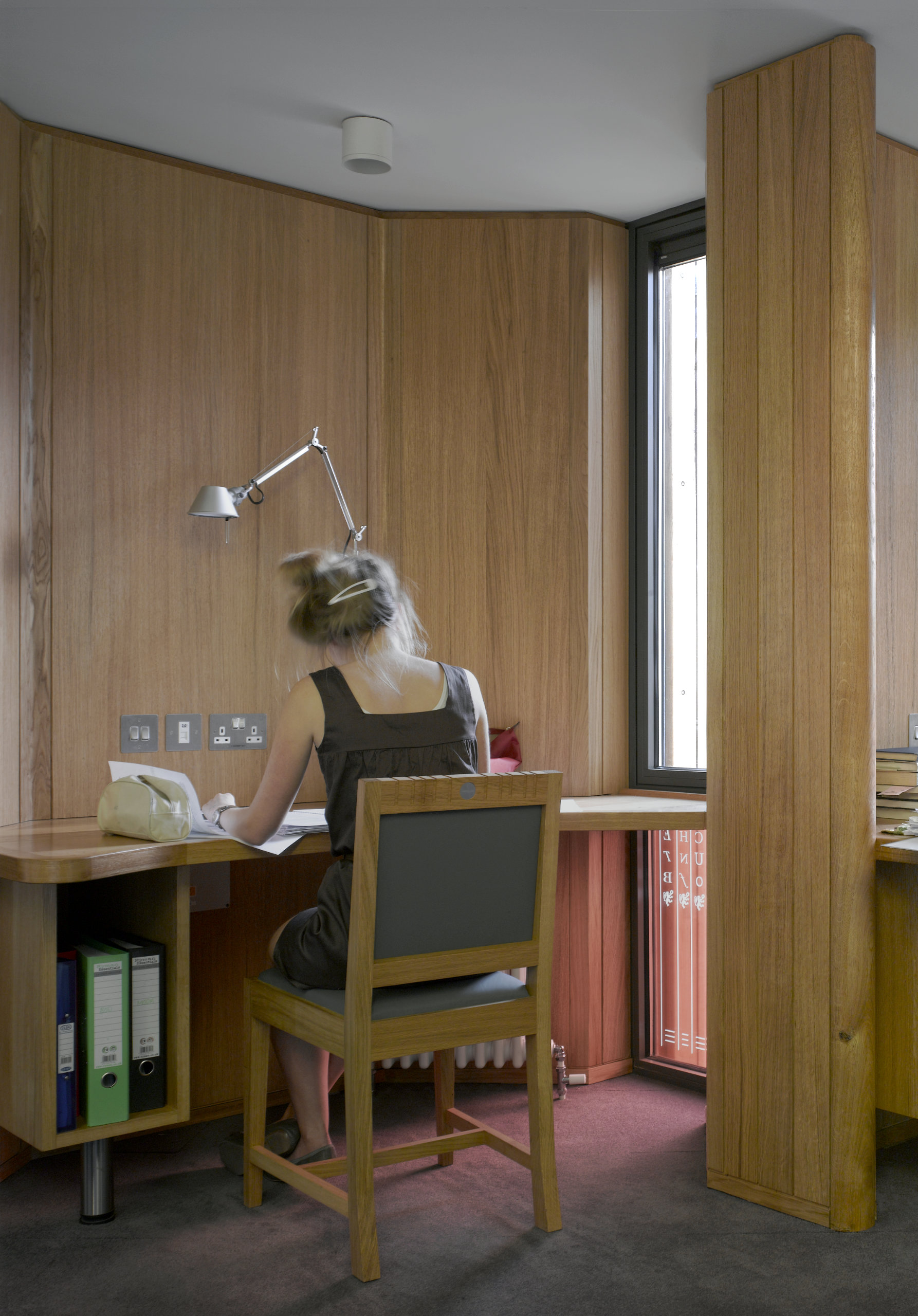
'In the 1960s Leslie Martin was head of the Cambridge school and, with the theoretician Lionel March, explored the architectural potential of the theory of the Fresnel square. Successive annuli, each enclosing an equal area, are added to a square figure. The result is to show that even a small increment to the dimensions of a square form adds a surprisingly large additional area. Here at Emmanuel, theory is translated into practice. The slender extra layer transforms the Cruickshank building from brusque book stack into library. The perimeter workplaces, not unlike those at Kahn's Exeter Library with their close relationship to the stacks, allow readers a daylit alternative to the more communal setting of the main reading room. A new Aalto-esque free-form rooftop reading room, with alternating bookcases and tall windows, offers yet another relationship between reader and books. 'Books do furnish a room', as Anthony Powell had it, and the expression beautifully captures the quality of this room that adds the further pleasure of book-framed glimpses in all directions across the rooftops of Cambridge. Another nice touch is the adoption of Aalto's trick of combining the rooflights with the artificial light fittings. In daytime the opal globes modulate and diffuse the otherwise potentially harsh downlight of the rooflights and the nighttime light is a simulacrum of daylight. Outside, the sweet chestnut cladding is in tune with the sinuous form of the building and is already acquiring a soft silver tone that complements the materiality of the Stokes building. On the interior the palette of oak joinery, white-painted plaster walls and ceilings and a limited range of carefully chosen floor finishes evokes the desirable calm of a library.
'There are a few less than convincing moments. Internally the atrium works beautifully with the enclosed facades of the Stokes building, but the external meeting of the two strikes me as inelegant. I am also uneasy with the sweet-chestnut-clad bollards that protect the ground floor from careless drivers. In front of the main entrance there is a new stone pavement and dwarf wall whose material would have been much more appropriate for the bollards, both functionally and metaphorically in clarifying the distinction between ground as mass and the relative lightness of the hovering timber cladding. It is an even greater pity that the court formed between the building and Tom Hancock's adjacent South Court is, in effect, a car park rather than a further addition to the fine sequence of such spaces at Emmanuel. This modern necessity, even in a Cambridge college, makes the bollards inevitable and deprives this fine addition to the college of a more tranquil and appropriate setting.'
Dean Hawkes is emeritus professor at the Welsh School Architecture, Cardiff University, and emeritus fellow of Darwin College, Cambridge. He is author of the Environmental Imagination (2008) and his new book Architecture and Climate will be published next year.
|